
Dear supporter of psychedelics healing,
This is the introduction to Part 7 of my ongoing postmortem, intended to strengthen our movement. Part 7 is attached to this email as a PDF and available on Substack as well. Don’t worry—the conclusion is next.
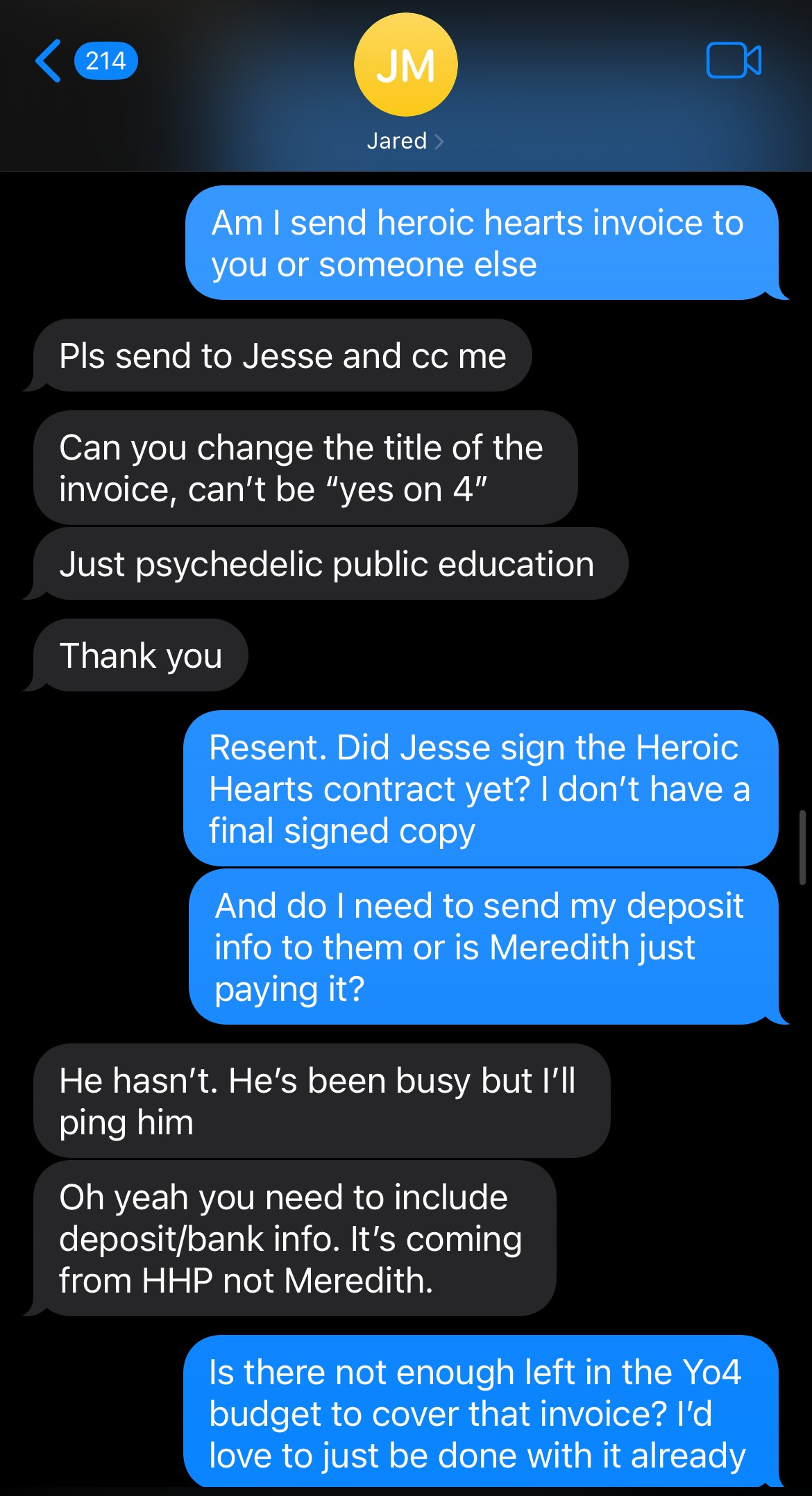
This section is all about the possible campaign finance issues of the campaign. While I am now represented by an attorney at Considine & Furey, I employed an attorney currently serving on Massachusetts’ State Ethics Commission—“an independent state agency that administers and enforces the provisions of the conflict of interest law and financial disclosure law” according to mass.gov—during spring 2025 to help me understand to what degree Jamie Morey and I could be in legal jeopardy due to our activities for the campaign. This was after I discovered the bonus payments for our Yes on 4 work did not appear to have been properly disclosed to state regulators.
Based on the documentation I shared with him and my descriptions of what occurred during the campaign, the attorney informed me there was possible legal jeopardy for me (and Morey by extension) as well as the ballot committee and certain nonprofit affiliates, particularly veterans charity Heroic Hearts Project. He also told me it was “very unlikely” I would be charged for my conduct, even if regulators determined I had likely engaged in illegal activity, so long as I was “on the side of the government” (i.e. was honest and transparent with state regulators). My takeaway from that conversation was that Morey and I would be safest from a reputational and legal standpoint by fully and transparently disclosing everything we knew related to possible violations of campaign finance law to the appropriate regulatory authority, the OCPF. And that was what we did, as reported by the Boston Globe and Lucid News.
Regardless of whether the OCPF eventually determines laws were broken, the dysfunction evident throughout the ballot committee’s operations (as already detailed in this postmortem) suggests conservative adherence to regulations might have prevented organizational bloat and contributed to more coherent strategic leadership—in addition to protecting grassroots advocates, nonprofit partners, and movement credibility.
All seven of the currently available sections of the postmortem are available through the links below.
My goal remains to offer transparency to strengthen our shared mission.
Thank you for your continued support and commitment to this cause.
With gratitude,
Graham Moore
(Former Yes on 4 Staffer)